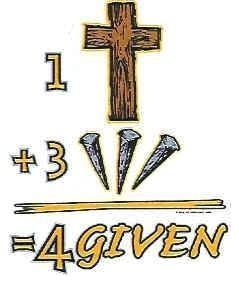
Lesson
LESSON ADDENDUM
(From the math lesson that destroys evolutionism: Middle School Lesson Plan)
By Karl C. Priest
(updated 10-10-2020)
Here is a great resource that was not available when I taught my lesson: Here Is How to Teach Intelligent Design to Young People
“Mathematics is the language of science and technology, and the toolkit by which these and related disciplines explicate their increasingly complex, interdisciplinary, and important investigations into the workings of the natural world and the power of these disciplines to affect it.” Dennis Berkey, President and CEO, Worcester Polytechnic Institute ( http://mpe2013.org/quotes/ (More than 100worldwide scientific societies, universities, research institutes, and organizations united to dedicate 2013 as a year for the Mathematics of Planet Earth)
“There are four great sciences, without which the other sciences cannot be known nor a knowledge of things secured. ... Of these sciences the gate and key is mathematics.” Roger Bacon ( Chapter 2, for example, in Roger Bacon and Robert Belle Burke (ed.), Opus Maius Chpt. 1 , 1 st paragraph)
“Maths is the language of the universe.” Marcus du Sautoy, the Charles Simonyi Professor for the Public Understanding of Science, University of Oxford
(http://www.newstatesman.com/education/2010/10/problem-science-mathematics)
“Mathematics is pure language - the language of science.” Alferd Adler
(Mathematics and Creativity , in The World Treasury of Physics, Astronomy and Mathematics , (T. Ferris, ed), Little, Brown and Co, 1991, p. 435)
"Mathematics is the language with which God wrote the universe." Galileo Galilee (please send me the source)
Notice: Almost all items on this page are snips (quotes) from others.
I try to designate mine with a “KP”.
Censoring Creationists
In one of their favorite sound bites, members of the Darwin lobby like to assert that intelligent design scientists do not publish peer-reviewed research. That claim is manifestly false. But the fact that intelligent design scholars do publish peer-reviewed articles is no thanks to Darwinists, many of whom do their best to ensure that peer-reviewed articles by intelligent design scientists never see the light of day.
Witness the brazen censorship earlier this year of an article by University of Texas, El Paso mathematics professor Granville Sewell, author of the book In the Beginning and Other Essays on Intelligent Design. Sewell's article critical of Neo-Darwinism ("A Second Look at the Second Law") was both peer-reviewed and accepted for publication by the journal Applied Mathematics Letters. That is, the article was accepted for publication until a Darwinist blogger who describes himself as an "opinionated computer science geek" wrote the journal editor to denounce the article, and the editor decided to pull Sewell's article in violation of his journal's own professional standards.
The publisher of Applied Mathematics Letters (Elsevier, the international science publisher) has now agreed to issue a public statement apologizing to Dr. Sewell as well as to pay $10,000 in attorney's fees.
http://www.evolutionnews.org/2011/06/journal_apologizes_and_pays_10047121.html
Do You Believe in “Magic”?
Most people recognize “magic” as an illusionary feat or trickery by sleight of hand. But how far are you willing to go to believe something can happen by “dumb luck” or chance? For example, if I were to roll a die and have it come up six three times in a row, would you consider that lucky? How about if I rolled six ten times in a row? Now you might suspect that I am using some trickery or that the die is weighted.
How far are we willing to go to accept something as a chance occurrence or before we recognize that it was just an illusion? We can test this by measuring our credulity factor. Credulity is the willingness to believe something on little evidence.
https://answersingenesis.org/evidence-against-evolution/probability/does-evolution-have-a-chance/
Chances of Evolution
Evolution preaches that nothing other than random chance in connection with survival of the fittest produced the human brain. Since survival of the fittest does nothing but remove changes that had been created by chance, it is chance and chance alone that is supposed to create the changes in the first place.
What are the odds that all of the connections of the brain (and this is a look at the connections only and not the nerve cells themselves) occurred by chance? There is a mathematical formula that calculates the odds of different arrangements.
Consider a deck of cards. Three of the 52 cards can be arranged in only 6 different ways. So, for 3 cards, the chances are one in 6 that any one arrangement would occur by accident.
When a 4th card is added, there are 4 new arrangements for each one of all of the other arrangements. So, to find the number of arrangements, multiply the new number of cards by the number of previous arrangements. So, when the 4th card is added, multiply 4 (the new number of cards) times 6 (the previous number of arrangements) and the result is the number of arrangements for 4 cards. So, when the 4th card is added, the number of possible arrangements becomes 24 and the chance of any one arrangement occurring by accident is 1 in 24.
To get the new number of arrangements for each new card, multiply the total number of cards by the number of prior arrangements. This is a commonly known mathematical forumla.
For four cards, the formula is 1 x 2 x 3 x 4 = 24. Try it! You can arrange only 4 cards in 24 separate ways.
If there were 5 cards, then the chances of a particular arrangement by chance are 1 in 120 (1 x 2 x 3 x 4 x 5).
We suggest that you see http://creationdesign.org/english/cards%20calculated.html to see how this works, otherwise you find it difficult to believe what follows. Because when you get to the 20th card, there are more different combinations of cards than there are seconds in two billion years.
If there were 6 cards then the chances are 1 in 720 (1 x 2 x 3 x 4 x 5 x 6), because there are now 6 new arrangements for each of the prior arrangements.
If there were 7 cards, then the chances are 1 in 5040 (1 x 2 x 3 x 4 x 5 x 6 x 7). If 8 cards, then one in 40300.
With 9 there are 362,880, with 10 there are 3,628,800, with 11 there are 39,916,800, with 12 there are 479,001,600, with 13 there are 6,227,020,800, with 14 there are 87,178,291,200, with 15 there are 1,307,674,368,000, with 16 there are 20,922,789,888,000, with 17 there are 355,687,428,096,000, with 18 there are 6,402,373,705,728,000, with 19 there are 121,645,100,408,832,000, and with 20 there are 2,432,902,008,176,640,000 random combinations.
There are only 1,051,200,000,000,000 seconds in two billion years. So, with the random combinations of just 20 cards, one has already surpassed the number of seconds in two billion years by more than two thousand times. That is, the number of random combinations of just 20 cards is more than two thousand times the number of seconds in two billion years.
So, when one considers that there are 1,000,000,000,000,000 cards in the "deck" of neurological connections in a human brain, it is easy to see that it is simply impossible for them to have formed by means of random accidents.
On the other hand, suppose these neurological connections evolved perfectly, with no mistakes whatever. Suppose they were simply "produced" in an assembly line with no evolution necessary. How long would it take to evolve a brain? If they were all "produced" on a regular basis with no mistakes, no survival of the fittest and without the need of generations that slowly bettered themselves, if they were simply produced perfectly formed and perfectly installed, how long would it take? If they had only 2 billion years to do it, then at the rate of one every ten seconds at the end of 2 billion years, they would be 18 billion years behind schedule. There are 1,051,200,000,000,000 seconds in two billion years and there are 1,000,000,000,000,000 neurological connections - this would require a rate of evolution of approximately one fully perfected connection per second for two billion years. And is hardly even the beginning, because at the same time one would have to evolve a non-physical digital (?) code that describes not only millions upon millions of separate colors, but also every sensation, emotion and thought of man.
The chances of both the accidental creation of the neurons and the arrangement of them are even greater, because the connections and the circuitry must be coincident. They must happen at the same time for every connection and the timing and firing of each neuron must be honed to a perfection down to the nanosecond. The creation of this circuitry involves the creation of exactly the correct electrical current mechanism, creation of the appropriate code used to communicate with other cells, the appropriate size and placement of the neuron (some neurons stretch from the head the toes), the appropriate insulation of the neurological channels, the proper timing mechanisms and unnumbered other characteristics that are properly arranged and organized down to the molecular level and below.
To argue that this was accomplished by a series of random accidents and survival of the fittest is not credible.
http://creationdesign.org/english/chances.html
Book Review by Rod Reynolds
Evolution From Space: A Theory of Cosmic Creationism
Sir Fred Hoyle and Chandra Wickramasinghe
New York: Simon and Schuster, 1981. 176 pp.
http://deluxdata.com/creation/h_w.html
(snips)
Every physical aspect of a living entity derives from the code written in the DNA of its cells.
The essential question is, how did the specific information get there?
For illustrative purposes, the authors isolate one particular problem, namely, the synthesis of the 2000 or so enzymes necessary for biological functioning and which are found in most living things. The authors calculate the probability of obtaining all of them through random associations in an organic soup as one part in 10 40,000, "an outrageously small probability that could not be faced even if the whole universe consisted of organic soup" (p. 24). To obtain another specialized complex protein, the histone H4 (the shortest of the five common histones), the authors calculate is one chance in (20) 100, "a number larger than the total of all the atoms in all the stars and galaxies visible in the largest astronomical telescopes" (p. 27). Another example or two is mentioned. Then the authors explain that "our discussion so far is still quite peripheral to really explaining the origin of life from a terrestrial organic soup of bases, amino acids, phosphates.... Nothing has been said of the origin of DNA itself, nothing of DNA transcription to RNA, nothing of the origin of the program whereby cells organize themselves, nothing of mitosis or meiosis. These issues are too complex to set numbers to" (p. 30). In this connection it's interesting that the chance of obtaining randomly the DNA in a single higher organism has been calculated as about one in 10 3 billion (one followed by 3 billion zeros). And the process of evolution through natural selection from chance mutations, if it were to occur, would be entirely random. By contrast, if the universe is taken to be 20 billion years old, "only" 6.3 X 10 17 (63 followed by 16 zeros) seconds have passed since it began. The authors state, "Darwinian evolution is most unlikely to get even one polypeptide [protein] right, let alone the thousands on which living cells depend for their survival" (p. 148).
The authors conclude, "...the probability of life originating at random is so utterly minuscule as to make the random concept absurd..." (p. 141). "For life to have originated on the Earth it would be necessary that quite explicit instructions should have been provided for its assembly" (p. 30). That leaves the other choice: "The theory that life was assembled by an intelligence" is vastly more probable than the alternative "of being the correct explanation.... Indeed, such a theory is so obvious that one wonders why it is not widely accepted as being self-evident. The reasons are psychological rather than scientific" (p. 130). So the authors are led to conclude from their analysis of the evidence that organic life can only have come into existence through the intervention of an intelligence non-organic in origin. "The speculations of The Origin of Species turned out to be wrong.... It is ironic that the scientific facts throw Darwin out, but leave William Paley, a figure of fun to the scientific world for more than a century, still in the tournament with a chance of being the ultimate winner" (pp. 96-97).
In place of Darwinism the authors propose the concept of directed panspermia.
Evolutionists Try to Prove Evolution with Math
A scientist claims probability mathematics proves all species evolved from a single cell. The headline blares: "All Species Evolved From Single Cell, Study Finds-- Creationism called ‘absolutely horrible hypothesis’—statistically speaking.” Within the article a statement is made that “The statistical analysis showed that the independent origin of humans is ‘an absolutely horrible hypothesis,’ (he) said, adding that the probability that humans were created separately from everything else is 1 in 10 to the 6,000th power.” (10^6000 or a ten followed by 5,999 zeroes) It is good to know that evolutionists admit that probability can prove whether or not life evolved from a common ancestor.
The evolutionist who came up with these statistics misunderstands or misrepresents what creationists believe. As a true believer in evolutionism, he does not understand that his conclusion is based upon his assumption that life evolved. The commonality among species of a few universal proteins is more logically explained by an Intelligent Designer who wisely used those proteins for interdependent life forms instead of stupidly making them different for each taxonomic domain.
The article insinuated that creation scientists were afraid to be interviewed. I doubt if a serious attempt was made to contact a major creationists. The fact is that the scientist who cruched those numbers is listed as Debate Dodger #22 on the list of hot air evolutionists.
Worthy of inclusion in BWAH HAH HAH HAAAA! is “Testing the theory of universal common ancestry is important, because biologists should question their major tenets just as scientists in other fields do Evolution should not be given any special status.”
"New mathematics research proves there's plenty of time for evolution" (12-14-10) is another headline that gives false hope to true believers in evolutionism. Those evolutionists are just monkeying around with math. Richard Dawkins provided similar propaganda and did it in a funnier way. Both the "study" that generated the guffaw getting headline and the deluded Dr. Dawkins's preposterous proposal fail to make scum-to-scientist evolution a reality. See "Dawkins' weasel revisited".
Even Compromisers Know Math Points to God
Dr. Frances Collins (sadly, a theistic evolutionist, i.e. evolutionist) believes “in a God outside of space and time who ‘loves mathematics and complexity’…‘ We live on this knife edge of improbability … the unreasonable effectiveness of mathematics [points to God's existence.] There’s no particular reason why all the events in the universe should follow simple mathematical equations.’ (http://www.aaas.org/news/releases/2007/0614collins.shtml )
Applying Probabilities to Evolution
The motivation for this paper came from two conflicting statements that I carried around over several years and finally decided to attempt a resolution. The first is from the evolutionist George Wald claiming time is a great miracle worker in the molecules-to-man evolution process; the second is from the celebrated French probabilist Emile Borel stating that highly improbable events never occur. Since molecules-to-man evolution requires a huge sequence of highly improbable random events, these two statements are in direct conflict.
https://answersingenesis.org/evidence-against-evolution/probability/applying-probabilities-to-evolution/
The probability that evolutionists will exaggerate (lie?) is 1—a certainty.
For a brief video that puts it in perspective see That's a Fact-Dumb Luck.
Hear Dr. Duane Gish discuss probability. See 19:10-26:40
of the video.
Also see:
Probability and the Origin of Life
Dedicated Darwinists have tried to deny the mathematics.
Is There a Problem with Probability?
Ants and the Golden Ratio
Do Cicadas Count?
Can evolution explain math?
Here Come Those Mathematicians Again October 12, 2013
A Gaping Gap?
The last time* mathematicians informed evolutionists there was a problem, which was in 1966 at the Wistar Symposium (Book Reviews Mathematical Challenges to the Neo-Darwinian Interpretation of Evolution. A symposium, Philadelphia, April 1966. Paul S. Moorhead and Martin M. Kaplan, Eds. Wistar Institute Press, Philadelphia, 1967. xii + 140 pp. Wistar Institute Symposium Monograph No. 5 John L. Harper Science 26 April 1968: 408.), they were told that evolution is a fact so there must be something wrong with the math. Now Harvard’s Leslie Valiant is taking a different tack in his new book Probably Approximately Correct. Sounding like Stephen Wolfram, Valiant argues that nature works according to algorithms, and that includes evolution. According to Edward Frenkel’s New York Times book review
(Evolution, Speeded by Computation by Edward Frenkel, Sept. 30, 2013), Valient proposes that ecorithms—algorithms that interact with their environment—are a key missing part of evolutionary theory:
The evolution of species, as Darwin taught us, relies on natural selection. But Dr. Valiant argues that if all the mutations that drive evolution were simply random and equally distributed, it would proceed at an impossibly slow and inefficient pace.
Darwin’s theory “has the gaping gap that it can make no quantitative predictions as far as the number of generations needed for the evolution of a behavior of a certain complexity,” he writes. “We need to explain how evolution is possible at all, how we got from no life, or from very simple life, to life as complex as we find it on earth today. This is the BIG question.”
Dr. Valiant proposes that natural selection is supplemented by ecorithms, which enable organisms to learn and adapt more efficiently. Not all mutations are realized with equal probability; those that are more beneficial are more likely to occur. In other words, evolution is accelerated by computation.
Well natural selection needs something. Why not ecorithms?
By Cornelius Hunter http://darwins-god.blogspot.com/
A Mathematical Proof That The Universe Could Have Formed Spontaneously From Nothing
(http://www.jewsnews.co.il/2014/11/09/a-mathematical-proof-that-the-universe-could-have-formed-spontaneously-from-nothing/)
Comments from creationists:
The basic assumption is that a metastable false vacuum existed before the Big Bang. So it's kind of like an eternal, preexistent quantum foam of virtual particles that pop into the real world and in an instant annihilate one another. Where did these particles come from? This is not a proof. I could show you a proof that God exists by assuming God does not exist, and this leads to an absurd conclusion: a reductio ab absurdum (proof by contradiction). (Larry)
----------------------
From this article: “What plays the role of the cosmological constant in Dongshan and co’s new theory? Interestingly, these guys say a quantity known as the quantum potential plays the role of cosmological constant in the new solutions.”
This potential comes from an idea called pilot-wave theory developed in the mid-20th century by the physicist David Bohm. This result seems to assume validity of Bohm's theory. Looking that up, one finds that in this theory...measurement is possible without "collapse" of the wave function, and how all sorts of quantum processes, such as transitions between states, fusion of two states into one and fission of one system into two, are able to take place without the need for a human observer. - https://en.wikipedia.org/wiki/Quantum_potential
So, this mathematical result seems to assume some things. Are those assumptions accepted in physics? Of course, scientific truth is not determined by popularity contests. But this quesitons is whether evolutionists, who may try to use this so-called proof, would be violating their own beliefs (particularly, accepted physics) in so doing.
Also from https://en.wikipedia.org/wiki/Quantum_potential: much of the physics community's resistance against the notion of the quantum potential may have been due to scientists' expectations that energy should be local. The reference for this above quote is dated 2013. It would seem the current physics does not accept totally the quantum potential theory, and if it is not valid, then the mathematical "proof" may be invalid also - at least possible, this is the first I heard of this proof, and I haven't gone deeply into it. (Joe)
----------------------
Is there an experiment to confirm this "mathematical-proof-that-the-universe-could-have-formed-spontaneously-from-nothing?" There are unlimited experiments that I can do to confirm that every object in the universe is an original. (Dr. Joseph Mastropaolo)
----------------------
From the article: “ At the heart of their thinking is Heisenberg’s uncertainty principle. This allows a small empty space to come into existence probabilistically due to fluctuations in what physicists call the metastable false vacuum.”
“(T)he idea of a false vacuum is wild speculation and that there is no indication, not even a little, that the vacuum of the universe is a false vacuum…” (http://www.askamathematician.com/2012/07/q-what-is-the-false-vacuum-and-are-we-living-in-it/ )
In order to have a vacuum there must be something. Try to get one yourself and see.
Probabilistic is “of or relating to probabilism”. Probabilism:
1. a theory that in disputed moral questions any solidly probable course may be followed even though an opposed course is or appears more probable
2. a theory that certainty is impossible especially in the sciences and that probability suffices to govern belief and action
(definitions were obtained from Google searches)
Note the use of “uncertainty”. That is the opposite of knowing FOR SURE. That says enough! Nevertheless, they get a metastable [(of a state of equilibrium) stable provided it is subjected to no more than small disturbances] false.
It STILL takes a Twilight Zone trip or a MIRACLE, to get something from nothing!
Proof that 1 =2: http://www.chemteam.info/Humor/One-Equals-Two.html More false proofs at: http://mathforum.org/dr.math/faq/faq.false.proof.html (Karl)
---------------------
Big Bang Cosmology is a Fake
--------------------------
A Mathematician's View of Evolution
--------------------------
If the Number Pi Were Set to Music
--------------------------
An Atheist Tried to Debunk the Math
--------------------------
George Wald from 1954: “Time is in fact the hero of the plot. Given so much time, the ‘impossible’ becomes possible, the possible probable, and the probable virtually certain. One has only to wait; time itself performs the miracles. ” (Cited by Creation.com). James F. Coppedge called attention to this quote in Evolution: Possible or Impossible? (1973, 1991) and showed it to be false by calculating the probability of getting even one gene or protein by chance under extremely favorable conditions. The probability is so low, it could not be expected to occur even one time, anywhere, in many, many, many times the age of the universe. Similar conclusions have been reached by Fred Hoyle, the Wistar Institute, Stephen Meyer (Signature in the Cell), and others.
To invoke chance as the origin of life represents a leap of faith so blind, and so unscientific, it exceeds the credulity of the wackiest cult on earth. “Miracle” is too gentle a word for an event that is inconceivably improbable. In any other case where a highly complex object is observed (such as a computer), chance would surely be rejected as a cause.
Coppedge stipulates 14 conditions in his model to make it easy for chance to succeed in creating a protein. Some of his conditions are so favorable to chance, they are totally unrealistic, such as assuming all 20 amino acids were present in the same place, in the same time, in the right concentrations and only in the left-handed form (see pp. 105–109 in ch. 6). He even modeled them combining into chains at fantastically rapid rates, with the process stopping if the chain hit Bingo! and a usable protein resulted. These concessions for chance are far more generous than anything any astrobiologist has ever proposed. The result, using well-known laws of probability, was still hopeless. Getting one protein by chance was 1 in 10 161. This means it could never happen, anywhere in the universe, in the entire age of the universe. The clincher is that a single protein is not alive. And each subsequent protein, of the hundreds needed for the simplest imaginable cell, would be even more improbable. Science must face reality; it’s just not going to happen by chance.
http://crev.info/2015/02/chance-evolutions-god/
--------------------------
Mathematics: Is God Silent?
“Evolutionary Math”
Is Math Just a Tool?
‘Redeeming Mathematics': Finding the Glory of God in 2 + 2
Website with lots of math and new articles
Computing the "Best Case" Probability of Proteins from Actual Data, and Falsifying a Prediction of Darwinism
Numbers in the Bible
Jesus and Mathematics
God & Math: Thinking Christianly About Math Education
Christian Perspective: Biblical Math Resources & More
Math and Jesus (video)
Math and Jesus (article)
--------------------------
"The chance of evolution actually happening is about as likely as a blindfolded person throwing a pebble into outer space and knocking down a satellite that then crashes onto a target on the back of a truck speeding down the highway. Even with billions of years, that’s not going to happen. (For those of you who like math, you can see some numbers here.) To be sure, Darwinists have tried to massage those impossible odds to work in their favor, but no amount of number obfuscation can get around the facts. Time is not their friend."
https://answersingenesis.org/evidence-against-evolution/probability/evolution-no-chance-billion-years/?
--------------------------
Using a Rubik's Cube for a Powerful Illustration
Rubik's Cube has over 43 quintillion combinations ( 43,252,003,274,489,856,000—that is 43 times 10 18). It can be used to explain the need for Intelligence (God) for life to exist. Use two cubes, one is solved and secured from moving.
“Explain that the cube is a search problem. Take the scrambled one, and show how you want to get from that one to the solved one. You need a search algorithm. Which approach is more likely to find the solution -- intelligent causes or unguided causes? The answer is obvious, but go ahead; rub it in. A robot randomly moving the colors around could conceivably hit on the solution by chance in short order with sheer dumb luck (1 chance in 43 x 10 18), but even if it did, it would most likely keep rotating the colors right back out of order again, not caring a dime. It would take an intelligent agent to recognize the solution and stop the robot when it gets the solution by chance.
“More likely, it would take a long, long time. Trying all 43 x 10 18 combinations at 1 per second would take 1.3 trillion years. The robot would have a 50-50 chance of getting the solution in half that time, but it would already vastly exceed the time available (about forty times the age of the universe). If a secular materialist counters that there could be trillions of robots with trillions of cubes working simultaneously throughout the cosmos, ask what the chance is of getting any two winners on the same planet at the same place and time. The one concession blocks the other. And what in the materialist's unguided universe is going to stop any robot when it succeeds? The vast majority will never succeed during the age of the universe.
“Now rub it in. It would vastly exceed the age of the known universe for a robot to solve the cube by sheer dumb luck. How fast can an intelligent cause solve it? 4.904 seconds. That's the power of intelligent causes over unguided causes.
Now really, really rub it in. The Rubik's cube is simple compared to a protein . Imagine solving a cube with 20 colors and 100 sides. Then imagine solving hundreds of different such cubes, each with its own solution, simultaneously in the same place at the same time. If the audience doesn't run outside screaming, you didn't speak slowly enough.”
http://www.evolutionnews.org/2015/12/rubiks_cube_is101311.html
--------------------------
Objection: Improbable events happen all the time.
Rebuttal: In the analogies that evolutionists use, such as the lottery, a series of coin flips, etc., there will be an outcome. Someone will win the lottery, the coin flips must be some arrangement of heads or tails, etc. These evolutionists are cheating with chance . But when it comes to the origin of first life , the probability is against any outcome—see Answering another uninformed atheist: Galileo, Miller—Urey, probability.
http://creation.com/15-questions-responses-1
-------------------------
To avoid the reality of mathematical probability True Believers in Evolutionism (TBEs) postulate a fantasy of a history that is infinite. There are logical reasons “Why Past History Cannot Be Infinite: There Must Be a Beginning”. (KP)
-------------------------
Probability Mistakes Darwinists Make
--------------------------
Calculating the Maximum Number of Trials Evolution Could Have Performed
--------------------------
“The 1966 Wistar Institute conference remains, fifty years later, a pain in the master narrative of Darwin advocates….'It looks like the math is not going to cooperate' with Darwinism, was the message the mathematicians and physicists delivered to their biologist colleagues…. The mathematical challenge, like the others, remains without a convincing answer (see here and here). That's why in replying to critics, Darwinists overwhelmingly content themselves with storytelling, insults, and invective.”
http://www.evolutionnews.org/2016/04/for_darwin_advo102798.html
--------------------------
Taking the Sting Out of the Drake Equation
--------------------------
Darwinian explanations are not just unlikely, merely implausible, but "physically impossible."…(Douglas Axe) Publishing in the Journal of Molecular Biology, he has probed the rarity of functional proteins, testing biologist Michael Denton's earlier assertion that they "could well be exceedingly rare." That itself was a vast, vast understatement: "I was able to put a number on the actual rarity -- a startling number," with "only one good protein sequence for every 10 74 bad ones…
If the invention of a working X is a whole project requiring extensive new functional coherence, then the invention of X by accidents of any kind is physically impossible. Why? Because for accidental causes to match insight on this scale would be a fantastically improbable coincidence, and our universe simply can't deliver fantastically improbable coincidences. The fact that much simpler things can be had by accident is completely irrelevant. The only thing we need to know to reject all accounts of X itself being invented by accident is that these stories all attempt to excuse an impossible coincidence…In a sentence: Functional coherence makes accidental invention fantastically improbable and therefore physically impossible. Invention can't happen by accident.
http://www.evolutionnews.org/2016/12/2_of_our_top_st_1103400.html
--------------------------
Darwin and the End of Providence: the Role of Chance in Evolution
--------------------------
What Can a Mathematician Contribute to the Evolution Debate?
--------------------------
“Accidental explanations for life necessarily invoke unbelievable coincidences.”
To see why this has to be true, suppose I were to place a small diamond just below the surface of the sand in the Sahara Desert, and you were to set out to find it, knowing nothing other than that it’s in the Sahara. I think we can agree that the challenge for you is nearly impossible. Yes?
We come to that conclusion just by knowing how unsearchably large the Sahara is and how small the thing to be found is. We don’t have to make any assumptions about how you go about searching. Whether you devote years or decades to the diamond hunt, you can’t feasibly search more than an infinitesimal fraction of the Sahara. The fact that this one crucial resource – time — is in limited supply therefore tells us you have only an infinitesimal chance of success.
For example, if a third party (ignorant of the diamond’s location) were to impose geographical constraints on you by saying you can only look in a particular small patch of the Sahara, that wouldn’t help you at all — unless this happened to be the right patch. But for it to be the right patch would be a remarkable coincidence in itself.
The problem with all accidental explanations of life is like this, but far more extreme. You don’t need accurate measurements of probability any more than you needed an accurate measurement of the Sahara. Accuracy is only needed for judging close calls, and this isn’t a close call.
In the end, there’s no way around the fact that for any accidental causes to produce life amounts to a coincidence that’s far too extreme to be credible.
https://evolutionnews.org/2017/06/undeniable-a-conversation-with-theistic-evolutionist-hans-vodder/
--------------------------
“Generations of students of biology and evolution have learned of the pioneering work of Ronald A. Fisher (1890-1962). A founder of modern statistics and population genetics…Fisher’s theorem, offered as what amounts to a “mathematical proof that Darwinian evolution is inevitable,” now stands as falsified… The Journal of Mathematical Biology is the official publication of the European Society for Mathematical and Theoretical Biology.”
https://evolutionnews.org/2018/01/peer-reviewed-science-a-mathematical-proof-of-darwinian-evolution-is-falsified/
--------------------------
The Wonders of Creation Reveal God's Glory - Patterns
--------------------------
What is the probability of a functional protein existing by chance?
--------------------------
The “All Outcomes Are Equiprobable” Argument
--------------------------
Multiple Universes Argument
“The multiverse is a handy thing, for it enables us to explain anything no matter how wildly improbable it might be. A 300-pound pig could spontaneously come together from molecules floating around in the atmosphere two thousand feet above the ground, hurtle down to earth, destroy your spanking-new Tesla, and we could simply invoke the multiverse. Evolutionary biologist Eugene Koonin, for example, notes that the probability of evolving RNA replication for the origin of life is so small that it is unlikely to occur anywhere in the universe, over its history to date. His solution is an infinite number of universes.That way, even something so mind-bendingly improbable as RNA replication will be ‘inevitable.’”
https://evolutionnews.org/2019/04/on-fantasy-in-modern-science/
--------------------------
In 2010 True Believers in Evolutionism (TBEs) came out with an article claiming that “ New mathematics research proves there's plenty of time for evolution.” (https://phys.org/news/2010-12-mathematics-plenty-evolution.html ) They claimed that “the idea that evolution would require ‘too much time’ to be true is proved false.” It is nice that they used a butterfly for their flighty argument.
To understand evolution, they claim, think about two ways a hacker tries to steal a computer’s 12 letter password. There are about 10 quadrillion (1 followed by 16 zeroes) possibilities. The very highly unlikely to succeed method is to keep guessing. To make it to the realm of reality the TBEs have to imagine a spy that will tell the hacker if any of his 12-letter guess are correct each time.
For butterfly eyes, evolution is the hacker and the spy is natural selection. BWAHAHAHAHAHAHA!*
A 2017 Scientific American article on “The Mathematics of Evolution” disclosed the truth about mathematical models. “(M)odels are prostheses for the imagination. They help you think about ways in which you might interpret data, even complicated data.” The really smart mathematician also admitted that “People who make models like I do for a living don’t actually believe they’re describing reality. We aren’t saying that our model is more probable than another model; we’re saying it exposes what is possible.”
(https://www.scientificamerican.com/article/the-mathematics-of-evolution-q-a-with-biologist-marcus-feldman/) So, these so-called mathematical proofs that evolution is possible are based upon TBE imaginations of unreality of what they wish and hope is possible. BWAHAHAHAHAHAHA!*
In 2018 the “thinking” of more TBEs is discussed in a “ Mathematics Shows How to Ensure Evolution” article. (https://www.quantamagazine.org/mathematics-shows-how-to-ensure-evolution-20180626/) “Natural selection has been a cornerstone of evolutionary theory ever since Darwin. Yet mathematical models of natural selection have often been dogged by an awkward problem that seemed to make evolution harder than biologists understood it to be. In a new paper appearing in Communications Biology, a multidisciplinary team of scientists in Austria and the United States identify a possible way out of the conundrum.” (emphasis added)
They used mathematical graphs and “about a hundred pages of dense mathematics” to depict how a “Star” and “Superstar” could affect natural selection* and “turn probability into near certainty” in their fertile imaginations. They assigned adjustable weights to the graph connections so they “could create” what they needed to prove their point. (emphasis added) In other words, these really smart scientist designed a method to show how evolution might work better even though they cannot create something living from nothing to test their hypothesis. BWAHAHAHAHAHAHA!*
In “ A Mathematician's View of Evolution” open-minded seekers of science can learn that “If a billion engineers were to type at the rate of one random character per second, there is virtually no chance that any one of them would, given the 4.5 billion year age of the Earth to work on it, accidentally duplicate a given 20-character improvement. Thus our engineer cannot count on making any major improvements through chance alone. But could he not perhaps make progress through the accumulation of very small improvements? The Darwinist would presumably say, yes, but to anyone who has had minimal programming experience this idea is equally implausible. Major improvements to a computer program often require the addition or modification of hundreds of interdependent lines, no one of which makes any sense, or results in any improvement, when added by itself. Even the smallest improvements usually require adding several new lines. It is conceivable that a programmer unable to look ahead more than 5 or 6 characters at a time might be able to make some very slight improvements to a computer program, but it is inconceivable that he could design anything sophisticated without the ability to plan far ahead and to guide his changes toward that plan…(J)ust as major improvements to a computer program cannot be made 5 or 6 characters at a time, certainly no major evolutionary advance is reducible to a chain of tiny improvements, each small enough to be bridged by a single random mutation.” (professor of mathematics, Dr. Granville Sewell, http://www.math.utep.edu/Faculty/sewell/articles/mathint.html)
Those are mathematical facts and scientific reality.
*See BWAH HAH HAH HAAAA!
Also see Let’s Squash Natural Selection.
--------------------------
--------------------------
Also see Dancing Honeybee Using Vector Calculus to Communicate and
MATH LESSON: THE WHY AND WHERE OF MATHEMATICS.
The MOST IMPORTANT math you can do is “Counting to the Appointment.”
COMPREHEND THIS EQUATION:
|